
INFORMATION MANUAL FOR COMPILED IN TERMS OF SECTION 51 OF THE PROMOTION OF ACCESS TO INFORMATION ACT, ACT 2 OF 2000 AND SECTION 17 OF THE PROTECTION OF PERSONAL INFORMATION ACT 4 OF 2013
1A. TABLE OF CONTENT/INDEX
1. DEFINITIONS AND INTERPRETATIONS
2. PURPOSE OF THIS MANUAL
3. LEGAL STATUS AND APPLICATION OF LAW
4. ACCESS TO INFORMATION
5. INTRODUCTION INTO THE COMPANY
6. CONTACT DETAILS
7. AVAILABILITY OF THIS MANUAL
8. THE GUIDE OF THE SA HUMAN RIGHTS COMMISSION
9. RECORDS
10. OTHER LEGISLATION APPLICABLE AND INFORMATION AVAILABLE IN TERMS OF THIS LEGISLATION
11. RECORDS AVAILBALE
12. DATA SUBJECTS, THEIR PERSONAL INFORMATION AND POTENTIAL RECIPIENTS OF THIS INFORMATION
13. PLANNED TRANS BORDER FLOWS OF PERSONAL INFORMATION
14. SECURITY MEASURES TO PROTECT PERSONAL INFORMATION
15. PRIVATE BODY INFORMATION MANUALS
16. PROCEDURE TO OBTAIN ACCESS TO THE RECORDS OR INFORMATION
17. HOW TO REQUEST ACCESS OF RECORDS HELD BY THE COMPANY
18. PROCEDURE TO MAKE A REQUEST FOR ACCESS
19. SEVERABILITY
20. FEES PAYABLE TO OBTAIN THE REQUESTED RECORDS OR INFORMATION
21. FEES IN RESPECT OF RECORDS REQUESTED FROM PRIVATE BODIES
22. LEGAL REMEDIES
23. PRESCRIBED FEES FOR INTERNAL APPEALS
24. APPEALS
25. DECISION ON APPLICATIONS TO COURT
26. WHEN ACCESS TO INFORMATION MAY BE REFUSED
27. GROUNDS FOR REFUSAL OF ACCESS TO RECORDS
28. AVAILABILITY OF THIS MANUAL
1. DEFINITIONS AND INTERPRETATIONS:
Unless the context clearly indicates otherwise, the following terms shall have the meanings assigned to them hereunder, namely
1.1 “Access fee” or “request fee” means a fee prescribed in terms of section 54 and Part III of the Regulations for the purposes of access and reproduction as per Annexure 2.
1.2 “Act” means the Promotion of Access to Information Act, Act 2 of 2000, as amended from time to time and the Regulations regarding the Promotion of Access to Information, published in terms of Government Gazette Notice 187 of 15 February 2002 as amended from time to time.
1.3 “Application” means an Application to a Court in terms of the Act (Section 78).
1.4 “Biometrics” means a technique of personal identification that is based on physical, physiological or behavioural characterisation, including blood typing, fingerprinting, DNA analysis, retinal scanning and voice recognition;
1.5 “Consent” means any voluntary, specific and informed expression agreeing to the Processing of Personal Information.
1.6 “Constitution” means the Constitution of the Republic of South Africa, 1996 (Act No. 1088 of 1996). Page 3 1.7 “Court” means
1.7.1 the Constitutional Court acting in terms of section 167(6)(a) of the Constitution; or
1.7.2 a High Court or another Court of similar status; or
1.7.3 a Magistrate’s Court, either generally or in respect of a specified class of decisions in terms of this Act, designated by the Minister, by notice in the Government Gazette, and presided over by a Magistrate designated in writing by the Minister, after consultation with the Magistrates Commission, within whose area of jurisdiction –
1.7.3.1 the decision of the Information Officer or relevant authority of a Public Body or the Head of a Private Body has been taken;
1.7.3.2 the Public Body or Private Body concerned has its principal place of administration or business; or
1.7.3.3 the Requester or Third Party concerned is domiciled or ordinarily resident.
1.8 “Data subject” means the Person to whom the Personal Information relates, including a Third Party.
1.9 “Information Officer” means the Person acting on behalf of the Company and discharging the duties and responsibilities assigned to the Head of the Private Body by the Act. The Information Officer is duly authorised to act as such and such authorisation has been confirmed in writing by the Head of the Private Body.
1.10 “Manual” means this Manual, compiled and published in terms of Section 51 of the Act and Regulation 9, also referred to as the Information Manual.
1.11 “Official” means any Person who works for or provides services to or on behalf of the Company, whether permanently or temporarily, full time or part time, and who receives or is entitled to receive any remuneration or payment. This includes, without limitation, directors (both executive and non-executive) and all permanent, temporary and part-time staff, contract workers as well as the Head1of the Private Body as defined in the Act.
1.12 “Person” means a natural Person or a juristic Person.
1.13 ” Personal information” means information of an identifiable, living or deceased2, natural person, and where applicable, an identifiable, existing juristic person, including, but not limited to:
1.13.1 race, gender, sex, pregnancy, marital status, national or ethnic origin, colour, sexual orientation, age, physical or mental health, disability, religion, conscience, belief, culture, language and birth or death3 of a Person;
1.13.2 education, medical, financial, criminal or employment history;
1.13.3 the biometric information of the Person;
1.13.4 ID number, symbol, e-mail address, physical address, telephone number or other particular assignment or unique allocation to a Person;
1.13.5 private or confidential correspondence;
1.13.6 the personal views, opinions or preferences of the Person;
1.13.7 a name, if it appears together with other Personal Information or if disclosure of the name itself would reveal Personal Information about the Person; and
1.13.8 the views or opinions of another individual about a Person.
1.14 “Personal Requester” means a Requester seeking access to a Record containing Personal Information about the Requester himself/herself.
1.15 “Private Body” means –
1.15.1 a natural Person who conducts or has conducted on any trade, business or profession, but only in such capacity;
1.15.2 a partnership which conducts or has conducted any trade, business or profession; or
1.15.3 any former or existing juristic Person but excluding a Public Body.
1.16 “Processing” means any operation or activity, whether or not by automatic means, including:
1.16.1 collection, receipt, recording, organisation, collation, storage, updating or modification, retrieval, alteration, consultation or use; 1.16.2 dissemination by means of transmission, distribution or making available in any form;
1.16.3 merging, linking, erasure or destruction.
1.17 “POAJA” means the Promotion of Administrative Justice Act, Act No. 20 of 2000, as amended.
1.18 “POPI” means the Protection of Personal Information Act, Act No. 4 of 2013, to be implemented.
1.19 “Public Body” means –
1.19.1 any department of state or administration in the national or provincial sphere of government or any municipality in the local sphere of government; or
1.19.2 any other functionary or institution when
1.19.2.1 exercising a power or performing a duty in terms of the Constitution or a provincial Constitution; or
1.19.2.2 exercising a public power or performing a public function in terms of any legislation.
1.20 “Record” means any recorded information, regardless of form or medium, including writing, electronic information, label, marketing, image, film, map, graph, drawing or tape which is in the possession or under the control of the Company, irrespective of whether it was created by the Company and regardless of when it came into existence.
1.21 “Regulator” means the Information Regulator established in terms of POPI to regulate affairs in terms of PAIA and POPI.
1.22 “Request” means a request for access to a Record or information of the Company.
1.23 “Requester” means any Person, including a Public Body or an Official thereof, making a Request for access to a Record of the Company, including any Person acting on behalf of that Person4.
1.24 “SAHRC” means the South African Human Rights Commission.
1.25 “The Company” means FLEXIBLE PACKAGES CONVERTORS (PTY) LTD, a private company (reg. no. 2014/232304/07) incorporated in the Republic of South Africa.
1.26 “Third Party”, in relation to a Request for access, means any Person, excluding the Company or a Personal Requester.
1.27 In this Manual paragraph headings are for convenience only and are not to be used in its interpretation. 1.28 An expression which denotes –
1.28.1 any gender, includes the other gender;
1.28.2 the singular, includes the plural and vice versa; and
1.28.3 an Official includes a reference to that Official’s successors in title and assignees allowed in law.
1.29 Any reference in this Manual to –
1.29.1 “business hours” shall be construed as being the hours between 08h30 and 17h00 on any business day. Any reference to time shall be based upon South African Standard Time;
1.29.2 “days” shall be construed as calendar days unless qualified by the word “business”, in which instance a “business day” and “working days” shall be any day other than a Saturday, Sunday or public holiday as gazetted by the government of the Republic of South Africa from time to time;
1.29.3 “law” means any law of general application and includes common law and any statute, constitution, decree, treaty, regulation, directive, ordinance, by-law, order or any other enactment of legislative measure of government (including local and provincial government) or statutory or regulatory body which has the force of law;
1.29.4 “person” apart from the statutory definition5 shall also in the normal sense mean any Person, company, close corporation, trust, partnership or other entity, whether or not having separate legal personality; and
1.29.5 “writing” means legible writing, in English, including any form of electronic communication contemplated in the Electronic Communications and Transactions Act, Act No. 25 of 2002.
1.30 The words “include” and “including” mean “include without limitation” and “including without limitation”. The use of the words “includes” and “including” followed by a specific example or examples shall not be construed as limiting the meaning of the general wording preceding it.
1.31 The words “will” and “must” used in the context of any obligation or restriction imposed on a Person have the same meaning as the word “shall”.
1.32 Any substantive provision, conferring rights or imposing obligations on a Person and appearing in any of the definitions in paragraph 1 or elsewhere in this Manual, shall be given effect to as if it were a substantive provision in the body of the Manual.
1.33 Words and expressions defined in any paragraph shall, unless the application of any such word or expression is specifically limited to that paragraph, bear the meaning assigned to such word or expression throughout this Manual.
1.34 Unless otherwise provided, defined terms appearing in this Manual in title case shall be given their meaning as defined, while the same terms appearing in lower case shall be interpreted in accordance with their plain English meaning.
1.35 A reference to any statutory enactment shall be construed as a reference to that enactment as at the Signature Date, and as amended or substituted from time to time.
1.36 Any reference in this Manual to “this Manual” or in any other agreement or document shall be construed as a reference to this Manual.
1.37 Unless specifically otherwise provided, any number of days prescribed shall be determined by excluding the first and including the last day or, where the last day falls on a day that is not a business day, the next succeeding business day.
1.38 If the due date for performance of any obligation in terms of this Manual is a day which is not a business day, then (unless otherwise stipulated) the due date for performance of the relevant obligation shall be the immediately preceding business day.
1.39 Where figures are referred to in numerals and in words, and there is any conflict between the two, the words shall prevail, unless the context indicates a contrary intention.
1.40 The use of any expression in this Manual covering a process available under South African law shall be construed as including any equivalent or analogous proceedings under the law of any other jurisdiction.
1.41 In this Manual the words “paragraph”, “schedule”, “annexure” or “appendix” refer to a paragraph, schedule, annexure or an appendix to this Manual.
2. PURPOSE OF THIS MANUAL: Section 32 of the Constitution provides for the right of access to information held by another person when that information is required for the exercise or protection of any right. To give effect to this Constitutional right, PAIA was enacted by Parliament in 2000 and regulations promulgated by the Minister of Justice in 2001.
As no right is absolute, the right of access to information held by a Public or Private Body may be limited to the extent that the limitation is reasonable and justifiable in an open and democratic society based on human dignity, equality and freedom. Consideration of access to information is a process of balancing of rights. Other legislation has also impacted on the flow of information and the restriction applicable in this regard. The Company not only wishes to comply with this legislation but also wishes to promote an internal culture and business environment compatible with these values and principles.
This Manual will provide for procedures and policies to enhance access to information held by the Company and matters connected therewith. The policies and procedures are designed to:
• expedite any Request for access
• provide clarity regarding the Officials to be approached in this regard
• set a standard for consideration of Requests for access
• align all internal policies to information compliance in general.
This Manual is not an isolated or stand-alone document. The Company endeavours to align all commercial and internal Records and policies to be fully information compliant. The manual will refer to such policies where applicable and guide any requester through the internal processes of the Company. The aim of this manual is to deal with requests for access to information and records in the most cost-effective and efficient way, with due consideration of the rights of the requester, the company and any third party.
3. LEGAL STATUS AND APPLICATION OF LAW:
3.1 Should any provision of this manual be in contradiction to the Act or any other legislation, then the provisions of the Act or other legislation shall apply.
3.2 Nothing in this manual prevents the Company from providing access to information or records in the possession of the Company in a manner which is materially less onerous in terms of any legislation other than provided for in this manual or in the Act6.
3.3 PAIA and this manual do not apply to records requested for criminal or civil proceedings.
3.4 PAIA and this manual apply to the exclusion of any provision or other legislation that prohibits or restricts the disclosure of a Record of the Company and that is materially inconsistent with the object or a provision of the Act or this Manuals.
3.5 Unless specifically provided for in any commercial or other agreements, this manual does not per se create any contractual relationship with any requester or person.
3.6 The Company shall be bound by the correctness of the information provided herein.
3.7 Failure to follow the procedures and comply with the conditions contained in this manual may lead to the refusal of a Request for access to information.
3.8 When considering protection of Personal Information, the provisions of the POPI Act shall be applied. If other legislation provides for more extensive conditions for processing Personal Information, such other legislation shall prevail. Pending announcement of the implementation of POPI, the obligations for information compliance is in any event established South African law incorporated in common law, corporate governance practices, existing constitutional right of protection of privacy and the provision thereof in the Consumer Protection Act. Furthermore, existing law and practices make provision for Information Officers to deal with Requests made pursuant to the implementation of POPI.
4. ACCESS TO INFORMATION:
PAIA gives all South Africans the right to have access to records held by the state, government institutions and private bodies. The following are the objectives which PAIA seeks to achieve:
• To ensure that the state takes part in promoting a human rights culture and social justice;
• To encourage openness and to establish voluntary and mandatory mechanisms or procedures which give effect to the right of access to information in a speedy, inexpensive and effortless manner as reasonably possible; and
• To promote transparency, accountability and effective governance of all public and private bodies, by empowering and educating everyone to understand their rights in terms of PAIA so that they are able to exercise their rights in relation to public and private bodies, to understand the functions and operation of public bodies, and to Effectively scrutinize, and participate in decision making by public bodies that affects their rights.
5. INTRODUCTION TO THE COMPANY
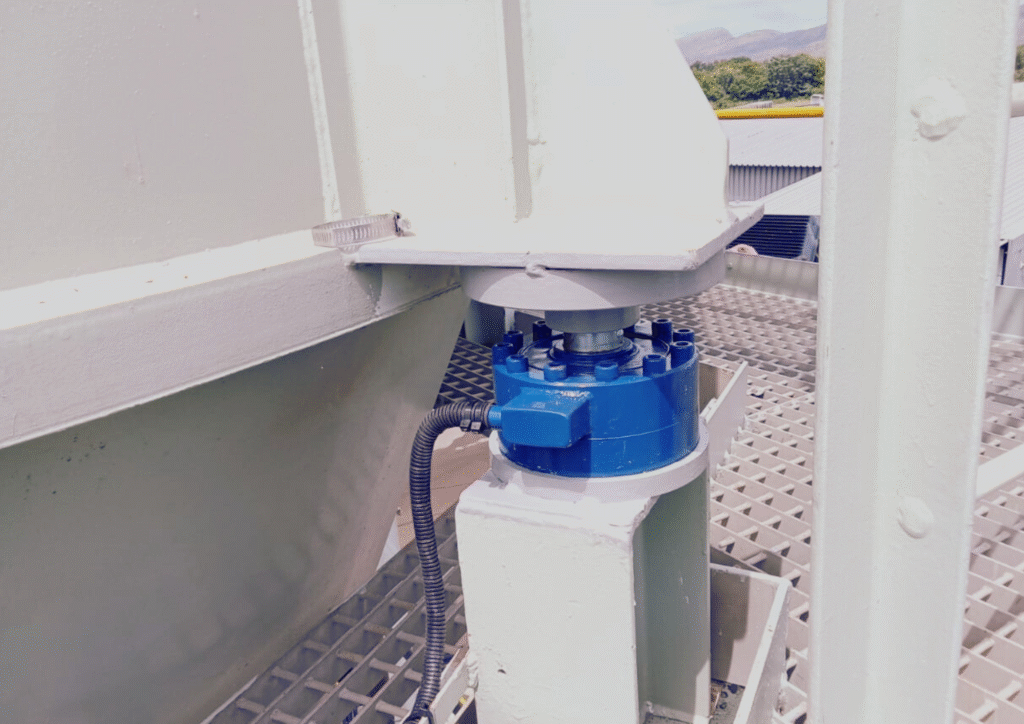
Loadtech is the leading manufacturer and supplier of load cells in Southern Africa. Loadtech products range from robust industrial load cells, to the highest accuracy commercial load cells. The range extends from 300g to 500 ton with accuracies from 0.2% to 0.03%, most of which are available from stock. Where standard load cells are not suitable, special load cells, or force sensors are designed and manufactured to fit your specific needs.
Vision: To be the preferred supplier of load cells, other strain gauge-based transducers and related equipment within Southern Africa. Mission To excel in customer service and technical support, whilst providing high quality products at market related prices.
Values:Honesty Integrity Fairness Respect
Overview: When it comes to specialised weighing solutions, the company has over 50 year’s collective experience.
Founded in 1987, Loadtech Load Cells has firmly established its reputation as a leader in quality load cell manufacturing. Technical application assistance with regard to your specific needs, and attention to detail, are unmatched in the industry. Custom Designs Whether your requirement is for custom weighing systems, applications such as force measurement, center of gravity determination or crane weighing systems, Loadtech will provide an innovative and economical solution, staying by your side long after the sale. Accreditation Loadtech Load Cells has an accredited explosion protection rating on various locally manufactured load cells.
Partners:The combination of own manufacture, and the extensive range of products from Vishay transducers, Vigia, Datum and Nobel, allows Loadtech Load Cells an unequalled degree of flexibility in offering weighing solutions.
6. CONTACT DETAILS
Company Name: Loadtech Load Cells (Pty) Ltd
Registration Number: 1987/000677/07
Head of the Company: Mr. J Harrison Information Officer: Mrs. A Dos Santos
Physical Address: 134 Sarel Baard Crescent, Gateway Industrial Park, Centurion, 0046
Tel Number: (012) 661 0830
Fax Number: N/A
E-mail address: popi@loadtech.co.za
Website address: www.loadtech.co.za
7. AVAILABILITY OF THIS MANUAL
1. A copy of this Manual is available at our offices situated at: 134 Sarel Baard Crescent, Gateway Industrial Park, Centurion, 0046
2. On request from our Information Officer Mrs. A Dos Santos
3. From our website: @ www.loadtech.co.za Note that: private bodies are no longer required to furnish the SAHRC with copies of their manuals, however they are still obligated to complete their manuals and upload it on their company’s website and make hard copies available for easy access to the general public.
Note further that: this manual may be updated from time to time, as and when required or if so, required by changes to legislation.
8. THE GUIDE OF THE SA HUMAN RIGHTS COMMISSION
The SA Human Rights Commission (SAHRC) has, in terms of section 10 of the Promotion of Access to Information Act, Act 2 of 2000 (“PAIA”), developed a guide containing information reasonably required by a person wishing to exercise or protect any right in terms of PAIA. This Guide contains amongst others the following information:
The purpose of PAIA;
The manner, form and costs of a request for access to information held by a body;
Assistance available from Information Officers and the SAHRC;
Legal remedies when access to information is denied;
When access to information may be denied; and
The contact details of Information Officers in the National, Provincial and Local Government.
There is no longer a requirement that this guide must be available on the SAHRC’s website but should you wish to obtain further information, you are welcome to contact the SAHRC of which the contact details are as follows: Postal Address: Private Bag 2700, Houghton, 2041 Physical Address: Braampark Forum 3 33 Hoofd Street JOHANNESBURG 2017 Telephone Number: 011 877 3600/3803/3825 Fax Number: 011 403 0625 E-mail: paia@sahrc.org.za Website: www.sahrc.org.za
9. RECORDS The company holds the following types of records: CATEGORIES OF RECORDS DOCUMENT TYPE
Records relating to the form of company Documents pertaining to an incorporated/personal liability company as required by the Companies Act 71 of 2008 (“the Companies Act”), including, but not limited to the prescribed certificates, memorandum and articles of association/memorandum of incorporation, forms and registers of directors and shareholders; Company rules, Minute books, Resolutions, Shareholders’ agreements and documentation relating to goodwill. Records relating to the professional status of persons working in the company Certificates with CIPC and other accredited certificates or cards proving professional registration as a designer, manufacturer and supplier of load cells etc. and/or other relevant statutory Boards and Councils; Proof of payment of annual and registration fees; Certificates of good standing.
Records related to assets, financial records and records held in terms of the Companies Act Register of Mortgages, Debentures and Fixed Assets; Annual Financial Statements, including Directors’ reports; Auditor’s reports; Books of Account, including journals, ledgers, supporting schedules to and ancillary books of account; Accounting records; Bank statements; Stock sheets; Delivery notes, orders, invoices, statements, receipts, vouchers and bills of exchange.
Employment records Employment contracts; Time worked by each employee; Attendance register, clock cards Employment equity plan (EEA13), Employment Equity Analysis (EEA12) and EEA2 & 4 reports as well of proof of submission; Salary and wage register, Disciplinary Code and Procedure, Skills Development Plan and Annual Training Report (WSP & ATR”), Proof of submission of WSP and ATR, training records; Staff information, including former staff members to be kept in terms of the BCEA and other legislation, Expense accounts; IRP5’s and tax information pertaining to employees; Performance management records (if applicable); Incentive schemes (if applicable); Conditions of employment and policies (including but not limited to leave policies, motor vehicle scheme, telephone policy, etc.).
Records related to customers/clients of the company Name, surname of client/customer, address, telephone number, bank Account details, Account Holder, contact number(s), ID Number, Place of business etc. Pension and retirement fund records Pension Fund Rules; Account records; Minutes of Meetings of trustees and members. Note that: all Fund Administration documents is kept by the Fund Administrators. These records are not available at the company.
The company’s pension/provident fund is administered by SIEFSA Health and safety records Evacuation plan; Information related to Health and Safety Committee/Officer. Minutes of meetings, Inspection by Safety Officer. Incident reports etc.
Employment Equity Details of Senior Manager responsible for Employment Equity, Committee members, Reports (EEA2, EEA4, EEA12 & EEA13), Minutes of meetings, Proof of submission to DOL. Skills Development WSP and ATR committee members, Minutes of meetings. Records related to property (movable and immovable) Title Deeds; Leases; Building plans; Mortgage Bonds or servitudes to fixed property; Asset register; Finance and Lease Agreements; Medicines and scheduled substances held in terms of the Medicines Act; Radiation control license (if applicable). Records relating to intellectual property Licence agreements; Non-disclosure agreements; Research and development agreements; Consulting agreements, Use agreements; Joint venture agreements; Strategic Plans. Agreements IT agreements (software and hardware); Agreements concerning provision of services or materials; Agreements with contractors and suppliers; Sale agreements; Purchase agreements; Lease agreements. Tax and VAT records Copies of all Tax Returns and documents relating to Income Tax and VAT, including payments made. Records relating to legal processes Complaints, pleadings, briefs and other documents pertaining to any actual, pending or threatened litigation, arbitration or investigation; Settlement agreements. Insurance records Insurance policies; Professional indemnity insurance; Claims’ records; Details of insurance coverage, limits and insurers.
10. OTHER LEGISLATION APPLICABLE AND INFORMATION AVAILABLE IN TERMS OF THIS LEGISLATION
Our company is required to hold certain records in terms of the following legislation:
1. Basic Conditions of Employment Act 75 of 1997;
2. Companies Act 71 of 2008;
3. Compensation for Occupational Injuries and Diseases Act 130 of 1993;
4. Consumer Protection Act 68 of 2008;
5. Employment Equity Act 55 of 1998;
6. Income Tax Act 58 of 1962;
7. Labour Relations Act 66 of 1995;
8. Occupational Health and Safety Act 85 of 1993;
9. Promotion of Access to Information Act 2 of 2000;
10. Protection of Personal Information Act 4 of 2013;
11. Road Accident Fund Act 56 of 1996;
12. Skills Development Levies Act 9 of 1999;
13. Skills Development Act 97 of 1998;
14. Unemployment Contributions Act 4 of 2002;
15. Unemployment Insurance Act 63 of 2001
16. Value Added Tax Act 89 of 1991.
17. Electronic communications and Transactions Act 25 of 2002;
18. Telecommunications Act 103 of 1996;
19. Electronic Communications Act 36 of 2005
20. Broad-based Black Economic Empowerment Act 53 of 2003;
21. National Credit Act 34 of 2005;
22. Pension Fund Act
11. RECORDS AVAILABLE
No notice has been submitted by the company to the Minister of Justice and Constitutional Development regarding the categories of records, which are available without a person having to request access in terms of Section 52(2) of PAIA. The company hold records in the categories listed above. The fact that we list a record type here does not necessarily mean that we will disclose such records, and all access is subject to the evaluation processes outlined herein, which will be exercised in accordance with the requirements of PAIA.
1. Internal records relating to our business, which includes the company’s business’s founding and other documents, minutes and policies; annual and other reports; financial records; operational records, policies and procedures; contracts; licenses, trademarks and other intellectual property; production, marketing records; other internal policies and procedures; internal correspondence; statutory records; insurance policies and records; etc.
2. Personnel records, which may include if applicable, records relating to fixed term employees, permanent employees, contractors, directors, executive directors, non-executive directors. It includes personal files and similar records, records a third parties have provided to us about their personnel; employment contracts, conditions of employment; workplace policies; disciplinary records; termination records; minutes of staff meetings; performance management records and systems and all employment-related records and correspondence.
3. Supplier and service provider records, which includes if applicable, supplier registrations; contracts; confidentiality agreements and nondisclosure agreements, communications; logs; delivery records; commissioned work; and similar information, some of which might be provided to us by such suppliers and providers under service- and other contacts.
4. Technical records, which includes if applicable, manuals, logs, electronic and cached information, product registrations, product dossiers, health professional’s council/statutory body records, approvals, conditions and requirements, trade association information and similar product information.
5. Third party information, which may be in our possession but which would be subject to the conditions set in relation to such possession and use or purpose limitations.
6. Environment and market information, which include information bought, publicly available information and commissioned information which pertains to the specific sector and market of our business and factors that affect the business, professional and healthcare environment.
12. DATA SUBJECTS, THEIR PERSONAL INFORMATION AND POTENTIAL RECIPIENTS OF THIS INFORMATION
The company holds the types of records and personal information in respect of the categories of data subjects specified below. The potential recipients of the personal information processed by the company, as may be appropriate and relevant, in terms of the law or otherwise with the consent of the relevant data subject, are also specified.
DATA SUBJECTS CATEGORIES OF RECORDS CATEGORIES OF PERSONAL INFORMATION POTENTIAL RECIPIENTS OF THE PERSONAL INFORMATION
Directors, shareholders, service providers, client(s) and employees Proof of registration at and payment of fees to any statutory bodies/councils including Bargaining Council (if applicable); Employment contracts and records; Non-Disclosure Agreements, Restraint of Trade, Certificates of good standing; Indemnity and other insurance policies; Complaints, disciplinary and/or CCMA and/or court proceedings relating to the data subject; Employment equity records i.e. reports submitted to DOL, Employment Equity Plan etc.; clients of company information, Pension and retirement fund records; Medical Aid scheme membership (if applicable); Membership of professional societies; Salary and payroll records; Tax certificates; PAYE, UIF and SDL returns and related records; Correspondence with insurers and other persons/bodies; Leave records, including family responsibility, annual leave and sick leave; Medical certificates; Training events, other certificates and records; Skills development plans and records; Performance management records. Names and surnames of employees/client(s); Contact details e.g. address, telephone and fax numbers, email addresses; Identity numbers/dates of birth; Race; Gender; Nationality; Qualifications; Statutory council(s) such as the Bargaining Council (if applicable) registration number; Specialist registration; Occupation; Employment records; Position held; Banking details; Employment history; Relevant medical history; Criminal behaviour and history; Correspondence; Tax number, returns and certificates; Leave records; Medical certificates; Salary; Employment benefits; Next-of-kin; Performance assessments (if applicable). SA Revenue Services (SARS) Relevant statutory bodies such as CIPC – Companies and Intellectual Property Commission Unions (if applicable), Contractors and vendors Relevant public bodies e.g., Compensation Commissioner, Unemployment Insurance Fund; Banks; Professional societies; Relevant public bodies, including government departments e.g., Compensation Commissioner, Road Accident Fund (RAF), Unemployment Insurance Fund (UIF), Department of Labour, SAPS for police clearance certificates; Trade unions, DEBT collectors etc. Page 15 Other contractors, vendors and suppliers, e.g., Hardware and software vendors, switching companies, insurers, auditors, legal counsel, consultants, debt collectors Agreements with contractors, vendors and suppliers; Non-Disclosure Agreements; Debt collection agreements; Legal opinions and advice; Correspondence. Names and surnames; Company and employer names; Contact details e.g., address, telephone and fax numbers, email addresses, website; Opinions; Correspondence; Track records; Pricing; Quotes; Payment records. Banks, Debt Collectors, Suppliers, Contractors, Legal; Council, Court(s) Public Bodies e.g., Department of Health, RAF, Compensation Commissioner, SARS, UIF and Statutory Councils (e.g., HPCSA, CMS, SAHRC) Complaints submitted to the relevant statutory councils; Correspondence; Newsletters and circulars issued by these councils. Names; Contact details e.g., address, telephone and fax numbers, e-mail addresses; Office bearers. Employees, Department of Labour, Workman’s compensation Fund, Unemployment Insurance Fund, SARS etc. Pension /Provident Fund Note that: all related Pension Fund documents are with Administrators Pension/Provident Fund policy Contact details e.g., address, telephone and fax numbers, e-mail addresses. Employees, Union obo employees, SARS, creditors of employees etc.
13. PLANNED TRANS BORDER FLOWS OF PERSONAL INFORMATION
The company is not planning to send any personal information about any data subject across the borders of the Republic of South Africa to third parties in foreign countries. Should this be required consent will have to be obtained, where possible, and transfers will be in accordance with the requirements of the law.
14. SECURITY MEASURES TO PROTECT PERSONAL INFORMATION The company takes the privacy of persons seriously and is therefore committed to ensuring that personal information in its possession or under its control is secure. In order to prevent unauthorised access or disclosure of information, appropriate physical, electronic and managerial procedures have been implemented to safeguard and secure the information. For example, access to information is controlled by a few persons with the authority to deal and administer such information and as such only those persons(s) having access to the information.
Access is also password controlled. A privacy policy has been implemented to ensure that personal information is processed strictly in accordance with the law, personal information is securely stored and that all persons who have access to that information are aware of their responsibilities. In addition, a document management policy has been implemented to ensure that records are maintained for as long as it is necessary in accordance with the relevant laws.
Electronic records of the company are securely stored in accordance with appropriate information technology security requirements. A risk assessment of the organisational and technical processes and procedures is conducted on a regular basis to ensure a continuous monitoring and enhancement of security measures. Other Staff members are required to adhere to the strict policies and processes/procedures implemented by the company and are subject to sanctions for any security breach. Any security breaches will be taken seriously and be addressed immediately with the necessary sanctions being imposed, as may be required and applicable.
15. PRIVATE BODY INFORMATION MANUALS
All private bodies in the Republic are required to compile a manual in terms of section 51 of PAIA.
1. How to obtain access to a manual of a private body All private bodies are required to make available a copy of the information manual in the following places: South African Human Rights Commission, at the office of head of the private body and to the controlling body of which that private body is a member, if applicable; and on the web site, if any, of the private body. The head of a private body may also publish the manual in the Government Gazette. The aim of the various distribution centres is to enable any person to obtain access to the manual of the private body.
2. Contents of the information manuals: The information manuals should contain the following information: 1. The postal and street address, phone and fax number and, if available, electronic mail address of the head of the private body; 2. A description of this Guide compiled by the South African Human Rights Commission and how to access it;
3. The latest notice, if any, regarding the categories of records of the private body which are available without a person having to request access in terms of PAIA;
4. A description of the records which the private body keeps in compliance with any other legislation;
5. Enough information to assist you in making a request for access to a record held by a private body;
6. A description of the subjects on which the private body holds records, and the categories of records held on each subject;
7. For security, administrative or financial reasons, the Minister may, on request and by notice in the Government Gazette exempt any private body or category of private bodies from compiling a manual for such period that the Minister thinks fit. 3.
Section 52 notice (voluntary disclosure notice – private body) The categories of records that are automatically available must include a description of those records that are available: • for inspection in terms of legislation other than PAIA;
• for purchase or copying from the public body; and
• from the public body free of charge. The head of a private body may delete any part of a record which on a request for access, may or must be refused in terms of the grounds for refusal of access to records. The head of the private body must describe how to access such records that are voluntarily disclosed and automatically available. If appropriate, the Minister must on a periodic basis and, by notice in the Government Gazette publish any description of the records so submitted and update any such description. The only fee payable, if any, for access to a record that is voluntarily disclosed and automatically available is a prescribed fee for reproduction.
16. PROCEDURE TO OBTAIN ACCESS TO THE RECORDS OR INFORMATION
PAIA grants a requester access to records of a private body, if the record is required for the exercise or protection of any rights. If a public body lodges a request, the public body must be acting in the public interest. Requests in terms of PAIA must be made in accordance with the prescribed procedures and at the fees specified in PAIA. Access to records and information is not automatic. Any person, who would like to request access to any of the above records or information, is required to complete a request form, which is attached to this Manual. It is also available at:
– The Information Officer of the company at the address, fax number or electronic mail address of the company as stipulated above; and
-The SAHRC website is (www.sahrc.org.za)
The fact that information and records are held by the company as listed in this Manual should not be construed as conferring upon any requester a right to that information or record. The requester must provide sufficient detail on the request form to enable the Information Officer to identify the record and the requester. The requester must identify the right he/she is seeking to exercise or protect and explain why the record requested is required for the exercise or protection of that right. If a request is made on behalf of another person, the requester must submit proof of the capacity in which the requester is making the request to the satisfaction of the Information Officer. Requesters will be advised of the outcome of their requests.
Access to the requested records or information or parts of the records or information may be refused on legal grounds. Requesters will be advised of the outcome of their requests.
17. HOW TO REQUEST ACCESS OF RECORDS HELD BY THE COMPANY
A request for access to a record is made by completing a request form called Form A for public bodies and Form C for private bodies. A copy of the forms is attached at the back of the Guide. The request forms must be completed and submitted to the information officer of the public body or head of the private body from whom access to a record is sought. The information officer of a public body or the head of a private body must respond to the request within 30 days. The forms are available from the offices and website of the South African Human Rights Commission at www.sahrc.org.za.
17.1. Manner of request A requester has a right of access to a record of a public body or a private body and must be given access to a record of a public body or private body if the requester complies with the following procedural requirements:
17.1.1 That the request is made on the request form to the information officer of the public body or head of a private body;
17.1.2 That the completed request form is faxed or electronically mailed or hand delivered to the information officer of the public body or head of the private body concerned;
17.1.3 That access to the requested record is not refused in terms of any of the grounds for refusal under PAIA.
17.2 How to fill in the request form – public and private bodies A request for access to a record of a private or public body is made, by filling in a form called a request form. The request must be made to the information officer of the public body or head of the private body at his address, fax number or electronic mail address. In the request form, the requester is required to provide the following information: 17.2.1 Sufficient particulars to enable an official of the public body or the head of a private body to identify the requester;
17.2.2 Sufficient particulars to enable an official of the public body or head of a private body to identify the record, including the reference number, if that is known to the requester. If the space in the request form is not adequate, the requester may continue on a separate folio and attach it to the request form. The requester must sign all additional folios;
17.2.3 Clearly indicate the form of access or nature of the record in which the record should be provided;
17.2.4 The preferred language in which the record should be provided in the case of a public body;
17.2.5 The postal address or fax number of the requester in the Republic;
17.2.6 State the manner in which the requester would like to be informed about the decision on the request;
17.2.7 If the request is made on behalf on another person, to submit proof of the capacity in which the requester is making the request; 17.2.8 In the case of a private body; the requester must state the right that is to be exercised or protected and why the record requested is required for the exercise or protection of such right. Note: Requesters who cannot read or write can make oral requests to the information officer of a public body who must fill in the request form for the requester.
17.3 Who can make a request for access to a record? A requester may make a request for access to records of a private or public body. The requester’s right of access to a record of a private or public body includes a right of access to a record containing personal information about the requester, or a person on whose behalf the request is made. A public body may make a request for access to a record of a private body for the exercise or protection of any rights other than its rights, only if it is acting in the public’s interest.
17.4 When a record is requested, the following will apply:
17.4.1 Fees may be payable. These fees are prescribed by law, and can change from time to time. The fee structure form part of this document.
17.4.2 The Request Form must be completed. It can be obtained from the Information Officer, on the SAHRC website (www.sahrc.org.za) or on the website of the Department of Justice (www.justice.gov.za) under “PAIA” and “forms”. On the Request Form all details must be completed, including the right the requester wants to protect by requesting the information.
17.4.3 If the requester is acting on behalf of someone else, the signature of the other person as the one who is authorized the request to be made.
17.4.5 The requester must state in which form (inspection of copy, paper copy, electronic copy, transcript, etc.) he/she wants to access the information.
17.4.6 If the record is part of another record, the requester will only be accessing the part(s) that pertains to the information s/he wants or is entitled to, and not the rest of the record.
17.4.7 All requests will be evaluated against the provisions of PAIA. PAIA allows the Information Officer/head to refuse access on grounds stipulated in PAIA. One can, for example, not access another person’s confidential information, or trade- or commercial secrets of a business.
18. PROCEDURE TO MAKE A REQUEST FOR ACCESS
18.1 The Requester must duly complete and sign the prescribed form and forward such to the Information officer/Head (Private body) as stated elsewhere herein. Only the duly authorised person(s) may accept requests in terms of PAIA and this Manual, unless provided for otherwise.
18.2 The person(s) receiving a request that does not comply with the provision(s) of PAIA or this manual, may refer the request back to the requester and insist that the prescribed form is used (FORM C) or that any additional information be provided as may be reasonably required to make a determination, in terms of PAIA and this Manual. Note that any request not fully complying with PAIA or this manual will be rejected.
18.3 Any request or prescribed form referred back to the requester shall be processed within seven (5) working days of receipt of a request.
18.4 If the request is made on behalf of another person, proof must be submitted of the capacity in which such person makes the request.
18.5 The Head as referred to elsewhere herein shall notify the requester as soon as practical possible, but not later than 30 days, of his/her decision to grant or refuse access.
18.6 Access shall be granted in writing or in any other reasonable manner as requested by the requester.
18.7 If the request for access is granted, the notice in terms of paragraph 1.6 must state the following:
18.7.1 The access fee (if any) to be paid upon access
18.7.2 The form in which access shall be given; and
18.7.3 That the requester may lodge an application with a Court to object to the access fee to be paid or the form of access granted.
18.8 If the request for access is refused, the notice in terms of paragraph 1.6 must
18.8.1 state adequate reasons for the refusal, including the provisions of the Act and this Manual on which such refusal is based;
18.8.2 exclude from any such reasons any reference to the content of the Record; and state that the Requester may lodge an application with a Court to object to the refusal of the Request or may apply any other remedies available to the Requester.
18.9 The person(s) to whom a request has been addressed may once extend the period of 30 days referred to in paragraph 1.5 (referred to as the “original period”) for a further period of not more than 30 days, if
18.9.1 the request is for a large number of records or requires a search through a large number of Records and if compliance with the original period would unreasonably interfere with the activities of the Company concerned;
18.9.2 the request requires a search for records in, or the collection thereof from, an office of the Company not situated within the same town or city as the office of the Head of the company and which search cannot reasonably be completed within the original period;
18.9.3 consultation among divisions of the company or with another company is necessary, or desirable to reach a decision regarding the request and which cannot reasonably be completed within the original period;
18.9.4 more than one of the circumstances contemplated above exist in respect of the Request, making compliance with the original period not reasonably possible; or
18.9.5 the requester consents in writing to such extension.
18.10 If a period is extended in terms of paragraph 18.9, the head must, as soon as reasonably possible, but in any event within 30 days after the request is received, notify the requester of such extension, the period of the extension and the reasons for the extension. 18.11
The notice in terms of paragraph 18.10 must state-
18.11.1 the period of extension;
18.11.2 adequate reasons for the extension, including the provisions of the PAIA and this Manual that are relied upon; and
18.11.3 that the Requester may lodge an application with a Court against the extension.
19. SEVERABILITY
19.1 If a request is made for access to a record of the Company containing information which may or must be refused, every part of the record that does not contain such information, and where such information can reasonably be deleted, shall be disclosed.
19.2 If a request for access to a part of a Record is granted and the other part of the record is refused, the relevant provisions under 18 above shall apply.
20. FEES PAYABLE TO OBTAIN THE REQUESTED RECORDS OR INFORMATION
The fees are prescribed for requesting and accessing information and records held by the company. A requestor (other than a personal requester) is required to pay the prescribed fee of R50 before a request will be processed. Details of these fees payable may be obtained from the Information Officer. They are also available on the website of the SAHRC. You may also be called upon to pay the additional fees prescribed by regulation for searching and compiling the information which you have requested, including copying charges.
21. FEES IN RESPECT OF RECORDS REQUESTED FROM PRIVATE BODIES
21.1 The fee for a copy of the manual as contemplated in regulation 9 (2) (c) is R1, 10 for every photocopy of an A4-size page or part thereof. 21.2 The fees for reproduction referred to in regulation 11 (1) are as follows:
R (a) For every photocopy of an A4-size page or part thereof 1,10 (b) For every printed copy of an A4-size page or part thereof held on a Computer or in electronic or machine-readable form 0, 75 (c) For a copy in a computer-readable form on— (i) stiffy disc 7,50 (ii) compact disc 70,00 Page 22 (d) For a transcription of visual images, for an A4-size page or part thereof 40, 00 (ii) For a copy of visual images 60, 00 (e) For a transcription of an audio record, for an A4-size page or part thereof 20, 00 (ii) For a copy of an audio record 30, 00
1. The request fee payable by a requester, other than a personal requester, referred to in regulation 11 (2) is R50,00. 4. The access fees payable by a requester referred to in Regulation 11(3) are as follows: R (1) (a) For every photocopy of an A4-size page or part thereof 1,10 (b) For every printed copy of an A4-size page or part thereof held on a computer or in electronic or machine-readable form 0,75 (c) For a copy in a computer-readable form on – (i) stiffy disc 7,50 (ii) compact disc 70,00 (d) (i) For a transcription of visual images, for an A4-size page or part thereof 40,00 (ii) For a copy of visual images 60,00 (e) (i) For a transcription of an audio record, for an A4-size page or part thereof 20,00 (ii) For a copy of an audio record 30,00 (f) To search for and prepare the record for disclosure for each hour or part of an hour reasonably required for such search and preparation. 30, 00 For purposes of section 54(2) of the Act, the following applies: (a) Six hours as the hours to be exceeded before a deposit is payable; and (b) One third of the access fee is payable as a deposit by the requester. (c) The actual postage is payable when a copy of a record must be posted to a requester.
22. LEGAL REMEDIES
Any person has a right to take further legal steps if the information officer of a public body or head of a private body refuses him/her access to a record that he/she have requested, and he/she had complied with all the requirements of the Act in making the request.
23. PRESCRIBED FEES FOR INTERNAL APPEALS
A requester who lodges an internal appeal must pay the prescribed appeal fee, if any. If such fee is in fact payable, the decision on the internal appeal may be deferred, until the fee is paid.
24. APPEALS
Where a requester or a third party is aggrieved by a decision of the head of a private body to refuse a request for access, or by a decision taken in terms of section 54 relating to fees payable for and in connection with access to records of a private body, section 57(1) relating to the extension to deal with the request, or section 60 relating to the form of access, the requester may within 30 days, and by way of an application, apply to court, for appropriate relief. The court will then review the request and decide whether in fact the head of the private body should give you the information you requested or not. Note: Once the Rules Board for Courts has produced the rules and procedures for access to information cases, all access to information matters will be heard in the Magistrates’ Court as a court of first instance (section 79 of PAIA).
25. DECISION ON APPLICATIONS TO COURT
The court hearing an application in terms of PAIA may grant any order that is just and equitable including orders confirming, amending or setting aside the decision which is the subject of the application;
1. Requiring the information officer or relevant authority of a public body or the head of a private body to take such action or to refrain from taking such action, as the court considers necessary within the period mentioned in the court order;
2. Granting an interdict, interim or specific relief, a declaratory order or compensation;
3. Granting an order as to costs. 26. WHEN ACCESS TOINFORMATION MAY BE REFUSED PAIA balances the requester’s constitutional right to information against the information officer’s or a head of a private body’s right to refuse access to information, if granting the information would harm the public or private body in question on any of the grounds mentioned below.
27. GROUNDS FOR REFUSAL OF ACCESS TO RECORDS
The information contained in this section is a summary of the grounds upon which a private body is entitled to raise, as grounds for the refusal of access to its records. The information is intended to provide a requester with clarity as to the reasons why a request may be refused by the private body. The list to follow is a summary of the grounds contained in Part 3, Chapter 4 of PAIA, and is by no means exhaustive.
27.1 Mandatory protection of privacy of a third party who is a natural person The head of a private body must refuse a request for access to a record of that body if its disclosure would involve the unreasonable disclosure of personal information about a third party, including a deceased individual. However, a record may not be refused if it consists of information: About an individual who has consented in writing to the disclosure of the information;
• Already publicly available;
• Given to the private body by the individual to whom it relates, and that individual
• was informed by the private body before it is disclosed that the information belongs to a class of information that may already be publicly available;
• About an individual’s physical or mental health, or well-being, who is under the care of the requester, and who is under the age of 18 years or incapable of understanding the nature of the request, and further if the disclosure would be in the individual’s best interests;
• About an individual who is deceased and the requester is the individual’s next of kin, or is making the request with the written consent of the individual’s next of kin;
• About an individual who is or was an official of a private body, and the information relates to the position or functions of the individual.
27.2 Mandatory protection of commercial information of a third party:
The head of a private body must refuse a request for access to a record of that private body if it contains:
• Trade secrets of a third party;
• Financial, commercial, scientific or technical information of a third party, other than trade secrets, where the disclosure thereof would be likely to cause harm to the commercial or financial interests of that third party;
• Information supplied to the third party in confidence, and if disclosed would place the third party at a disadvantage in contractual or other negotiations, or prejudice the third party in commercial competition. However, a record may not be refused if it consists of information:
• About a third party who has already consented in writing, to its disclosure to the requester;
• About the results of any product or environmental testing or other investigation supplied by the private body or the results of any such testing or investigation carried out on by or on behalf of the private body and its disclosure would reveal a serious public safety or environmental risk.
27.3 Mandatory protection of certain confidential information of a third party
The head of a private body must refuse a request for access to a record of that body, if its disclosure would constitute an action for breach of a duty of confidence owed to a third party in terms of an agreement.
27.4 Mandatory protection of safety of individuals, and protection of property
The head of a private body must refuse a request for access to a record of that body, if its disclosure could reasonably be expected to endanger the life or physical safety of an individual.
The head of a private body may refuse a request for access to a record of that body if its disclosure would be likely to prejudice or impair: • The security of a building, structure, or system, including a computer or communication system; a means of transport or any other property;
• The methods, systems, plans or procedures for the protection of an individual in accordance with a witness protection scheme; the safety of the public or part of the public or the security of a building, structure, or system, including a computer or communication system, a means of transport or any other property.
27.5 Mandatory protection of records privileged from production in legal proceedings
The head of a private body must refuse a request for access to a record of that body, if the record is privileged from production in legal proceedings unless the person entitled to the privilege has waived such privilege.
27.6 Commercial information of a private body The head of a private body may refuse a request for access to a record of that body if the record:
• Contains trade secrets of the private body;
• Contains financial, commercial, scientific or technical information, other than trade secrets of the private body, and the disclosure thereof would likely cause harm to the commercial or financial interests of that body;
• Contains information, the disclosure of which could reasonably be expected to put the private body at a disadvantage in contractual or other negotiations; or prejudice the body in commercial competition;
• Is a computer programme as defined in the Copyright Act, No. 98 of 1978, which is owned by the private body, unless it is required to give access to a record in terms of PAIA.
Note that a record may not be refused if it consists of information about the results of any product or environmental testing or investigation (excluding the results of preliminary testing or investigations conducted for developing methods of testing), carried out by or for the public body, and the disclosure thereof would reveal a serious public safety or environmental risk.
27.7 Mandatory protection of research information of a third party, and protection of research information of a private body
The head of a private body must refuse a request for access to a record of that body, if the record contains information about research being carried out or to be carried out, by or on behalf of a third party, and if this were to be disclosed, it would be likely to:
• Expose the third party or the person carrying out the research or will be carrying out the research on behalf of the third party, or the subject matter of the research, to a serious disadvantage.
The head of a private body may refuse a request for access to a record of that body, if the record contains information about research being carried out or about to be carried out, by or on behalf of the private body, and if this were to be disclosed, it would likely:
• Expose the private body or the person carrying out the research or will be carrying out the research on behalf of the private body, or the subject matter of the research to a serious disadvantage.
27.8 Mandatory disclosure in the public interest
Despite the above listed grounds for refusal, the head of a private body must grant a request for access to a record of that body if, the disclosure thereof would reveal evidence of:
• A substantial contravention of, or failure to comply with the law; or
• An imminent and serious public safety or environmental risk; and the public interest in the disclosure of the record, outweighs the harm contemplated under the ground for refusal.
28. AVAILABILITY OF THIS MANUAL
A copy of this manual is available for inspection, free of charge, at the company premises. A copy of the Manual could also be requested from the Head/CEO or Information Officer. The details of which is mentioned elsewhere herein against payment of the relevant fee, which could be obtained from the person.
Information Officer: Mrs A Dos Santos
Date 24 June 2021